 Acne.org Products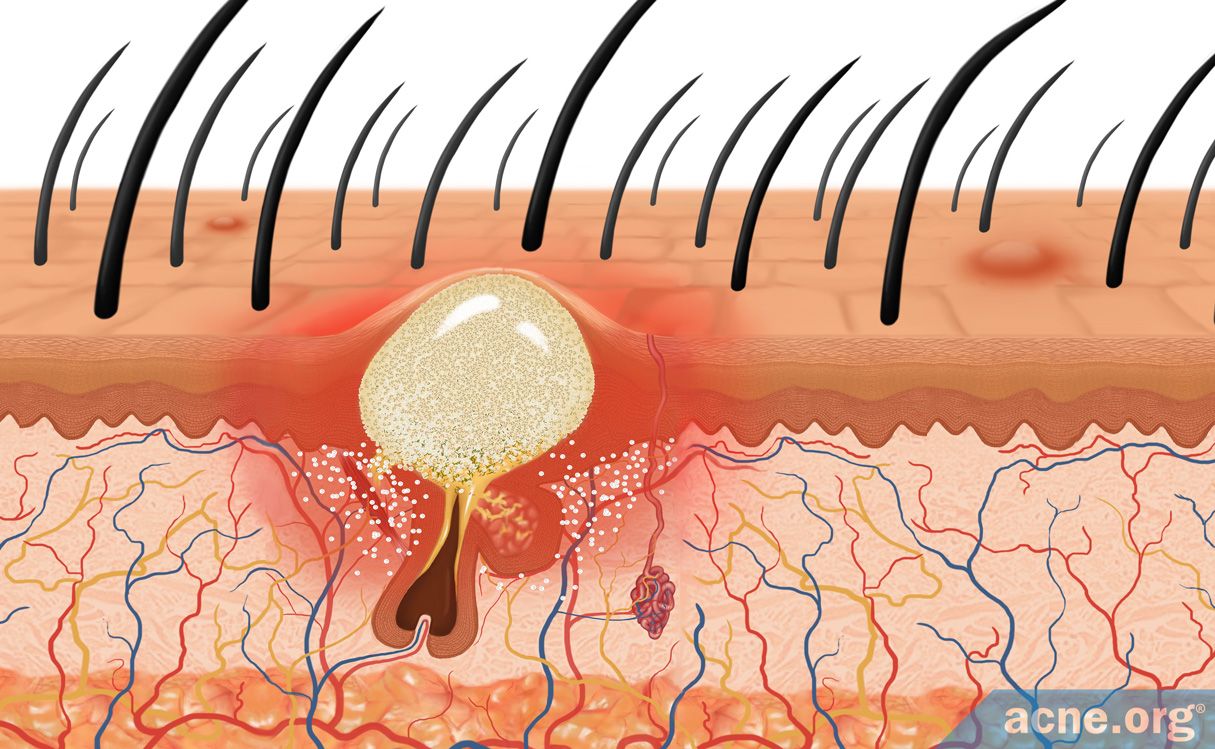
What It Is and How to Treat It

The Essential Info
Acne can occur on the scalp but is less noticeable because hair covers it up. Hair, however, can make it harder to treat as well.
If you only get an occasional pimple on your scalp, don’t worry about it. Leave it be, and it should clear on its own.
However, if you experience more than an occasional pimple on your scalp, here are a couple of ways to help prevent scalp acne:
- Avoid greasy hairstyling products, especially pomades and brilliantine.
- Stop using conditioner for a while and only use shampoo and see if this helps.
Treatment options for scalp acne are similar for acne anywhere on the face or body, with the addition of dandruff shampoo:
- Benzoyl peroxide – Benzoyl peroxide is powerful at reducing acne, but since it is a peroxide, it may lighten some people’s hair. It doesn’t dramatically bleach the hair, but it can noticeably lighten it.
- Salicylic acid – Salicylic acid is not as strong or effective as benzoyl peroxide, but it will not lighten the hair.
- Dandruff shampoo – Dandruff shampoo contains antifungal ingredients like ketoconazole or ciclopirox, and some people claim it helps reduce scalp acne, but there are no studies to confirm this.

The Science
Acne can occur on the scalp much like it can on the face and on the rest of the body. However, the scalp can be harder to treat because the hair gets in the way.
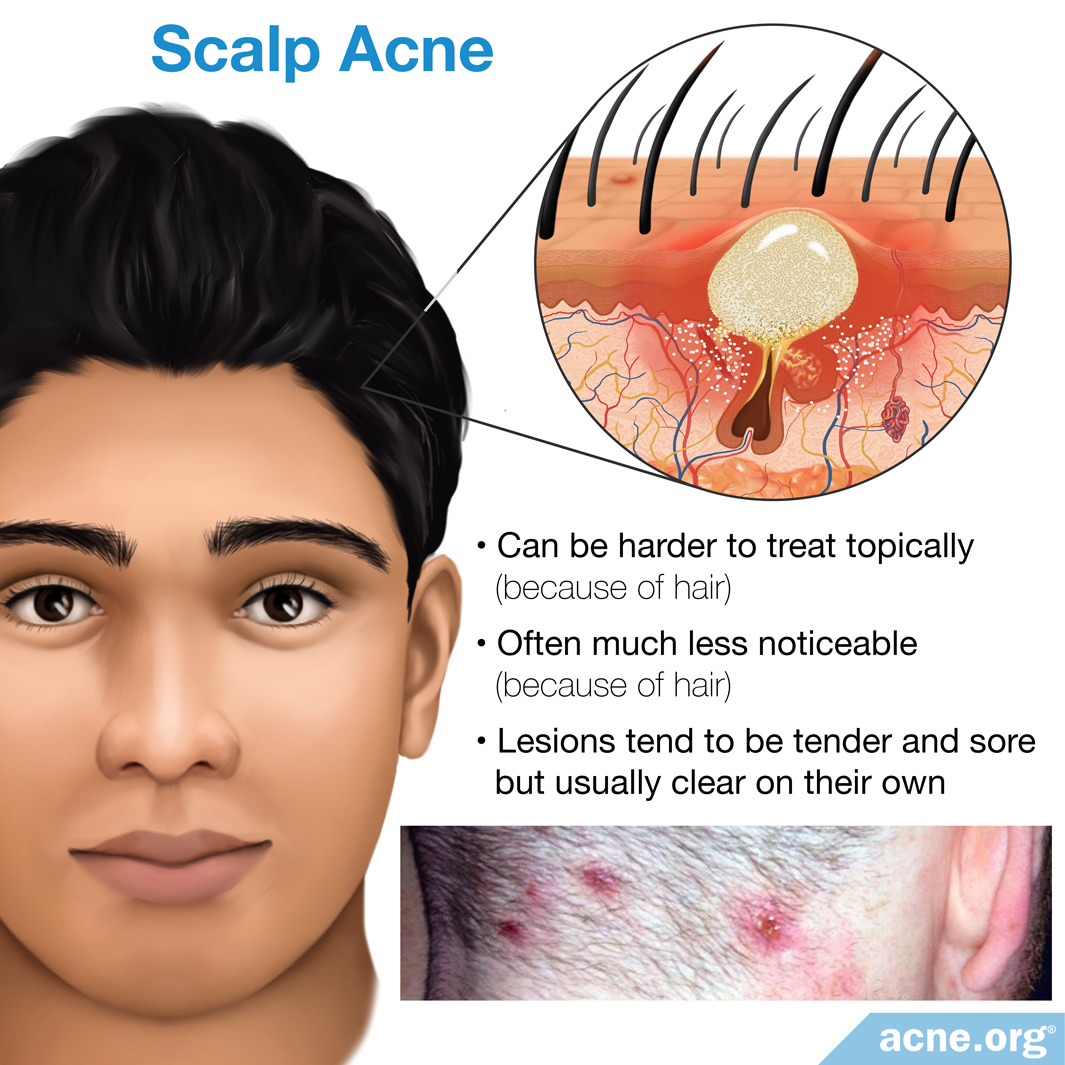
The good news is that scalp acne is often much less noticeable because hair covers it up. Many people get occasional pimples on the scalp and simply let them be. While acne lesions on the scalp can tend to be tender and sore, they usually clear on their own within a week or so. However, if you suffer with scalp acne that is really bugging you, read on.
What to Avoid
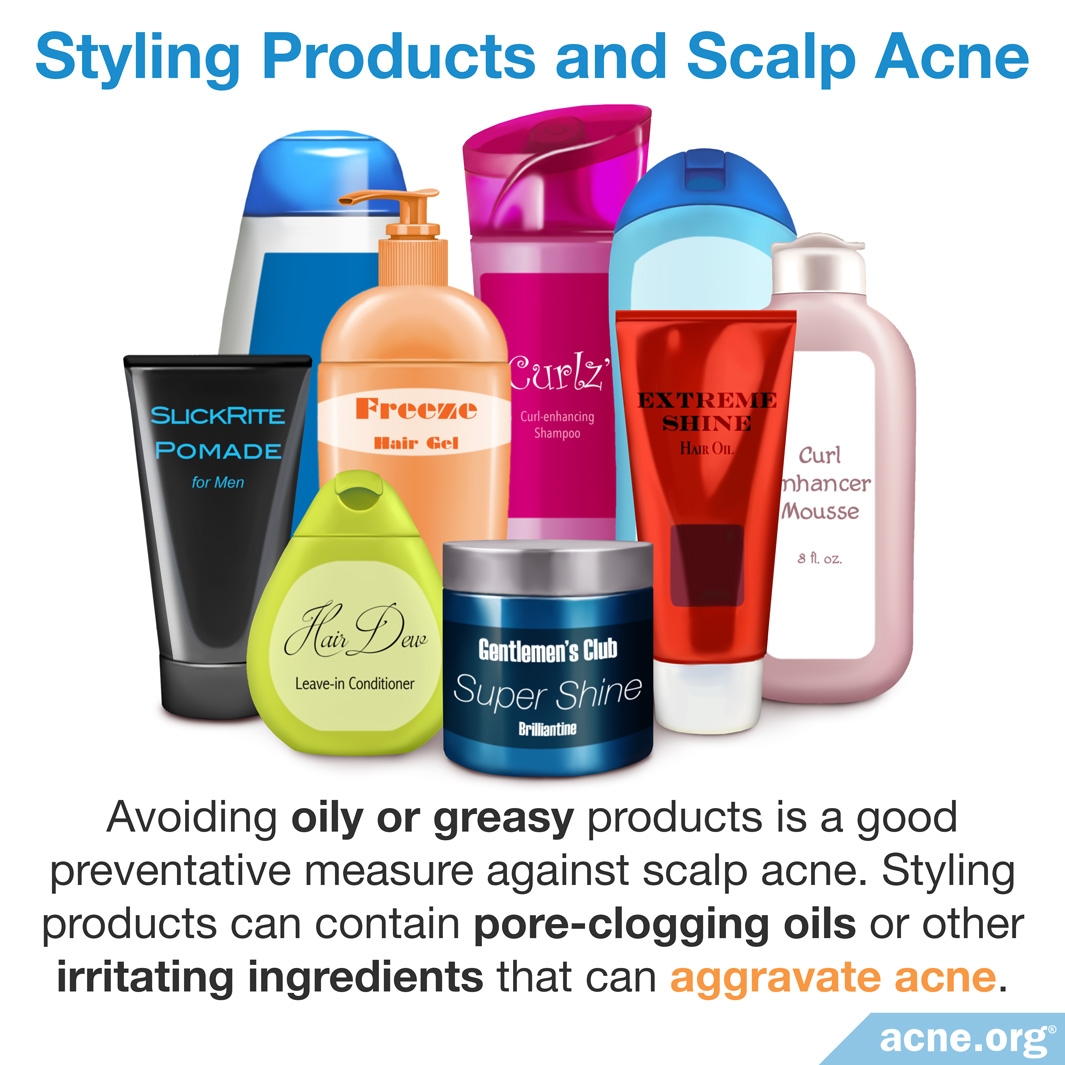
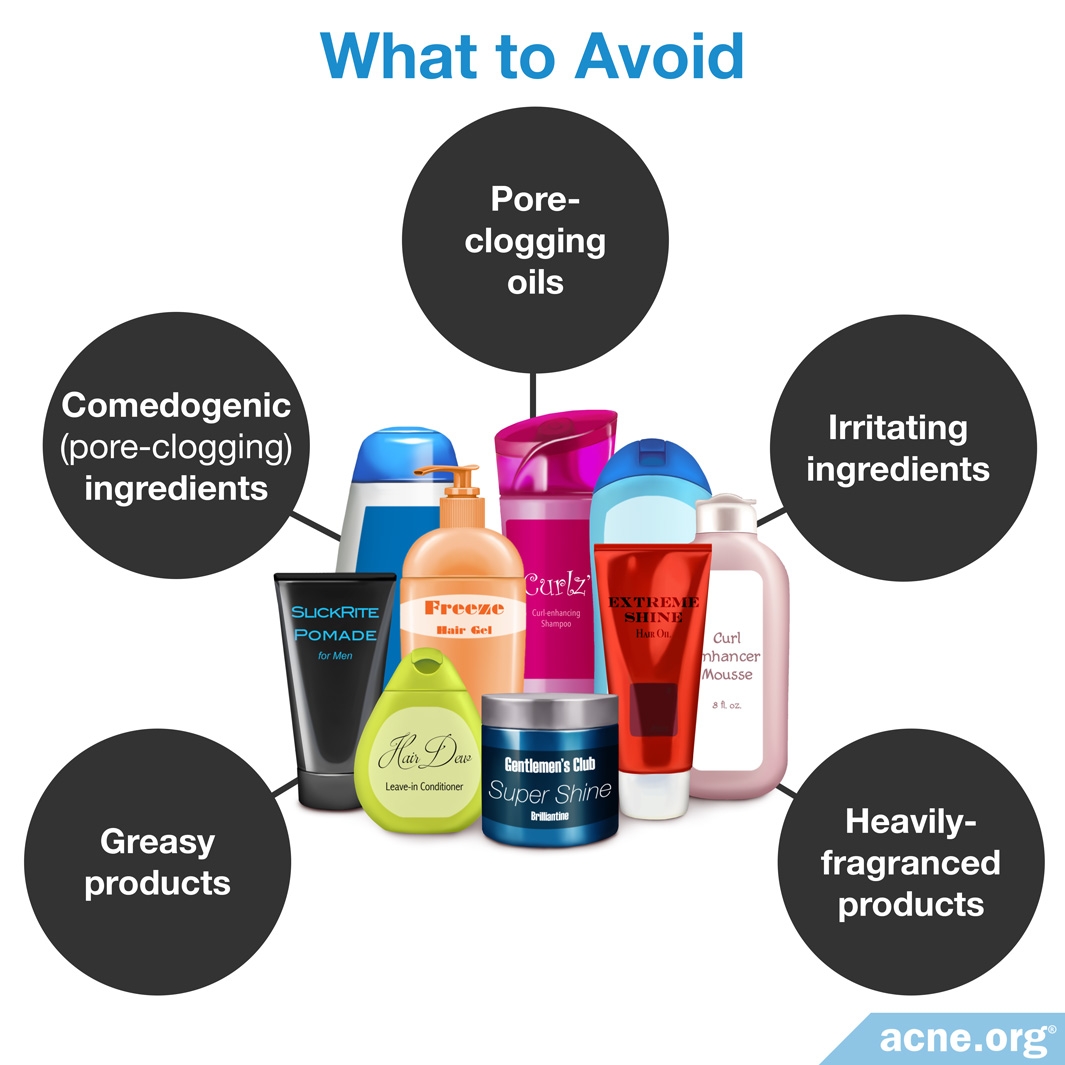
Oily or greasy styling products: Styling products sometimes contain oils or other irritating ingredients that can aggravate acne. If you’re battling with some scalp acne, try forgoing your usual styling products for a few weeks and see if that helps clear you up. This is particularly true of some hair products marketed to black people that can contain greasy emollients. Pomade, for instance, is so well-known for causing acne that it has its own nickname in the dermatological community: “pomade acne.”1
Hair conditioner: Some hair conditioners also contain heavy humectants which can irritate acne-prone skin. If you’re struggling with scalp acne, try using only a gentle shampoo for your hair and not using conditioner for a few weeks and see if that helps.
Comedogenic (pore-clogging) ingredients: Check the label of your hair products to make sure they do not contain comedogenic ingredients.
Heavily fragranced products: The skin of a small percentage of people is sensitive to fragrances. Ingredients that impart fragrance can sometimes irritate the skin of sensitive people, and this irritation may lead to more acne.
Treatment Options
You can treat acne on the scalp with many of the medications used to treat acne on the rest of the face and body. The most effective medication is benzoyl peroxide, however it is a peroxide, which means it can lighten hair in some people.
Salicylic acid is another widely available over-the-counter ingredient that can be easily applied to the scalp with the fingers or with a cotton ball, but usually only provides partial effectiveness.
People on the acne.org forums have also been experimenting with dandruff shampoo to treat their body acne, so shampooing with a dandruff shampoo might be an interesting option for the scalp as well. Anti-fungal ingredients in dandruff shampoo such as ketoconazole or ciclopirox may also be able to help with scalp folliculitis (see below).
Special Cases of Scalp Acne
In rare cases, scalp acne can be more severe and require a more specialized treatment approach.
(Rare) Acne keloidalis nuchae that extends to the scalp: Sometimes, a special form of acne known as acne keloidalis nuchae (AKN), which usually occurs on the back of the neck, can extend to the scalp on the back of the head. AKN is most common in African-American males and is often triggered by physical irritation of the back of the neck, such as from closely shaving the hair on the back of the neck. In certain rare cases, AKN can lead to alopecia (hair loss).2-4 If you suspect you might have AKN, ask your barber to be extra gentle when clipping your hair, and ask that he/she doesn’t get too close to the skin. Generally speaking, ask them to be careful when working around the back of your neck.
(Rare) Cystic acne of the scalp: In cystic acne of the scalp, the skin of the scalp develops cysts, which are large lesions filled with fluid or pus. Scalp cysts have thick walls and deep cavities, making them very difficult to treat. The main treatment for cystic acne of the scalp is surgical: the doctor makes an incision into each cyst to drain the fluid and remove any dead or damaged skin tissue. Some experts suggest combining surgical treatment with photodynamic therapy (PDT), a form of intense light therapy, for better and longer-lasting results.5
(Extremely rare) Acne conglobata of the scalp: Doctors have recently reported on one case of a young man with acne conglobata of the scalp. Acne conglobata is a rare and very severe form of acne that often leaves behind large scars. It typically appears on the face and body, and this is the only officially recorded case on the scalp. Acne conglobata of the scalp involves blackheads as well as nodules: large, deep acne lesions that can measure 2-3 cm across. After nodules heal, they can leave behind scars as well as hairless patches that gradually regrow hair over the course of 2-3 months.6 While the case report did not discuss treatment, doctors most often prescribe isotretinoin (Accutane®) for acne conglobata.
Not Acne: Scalp Folliculitis
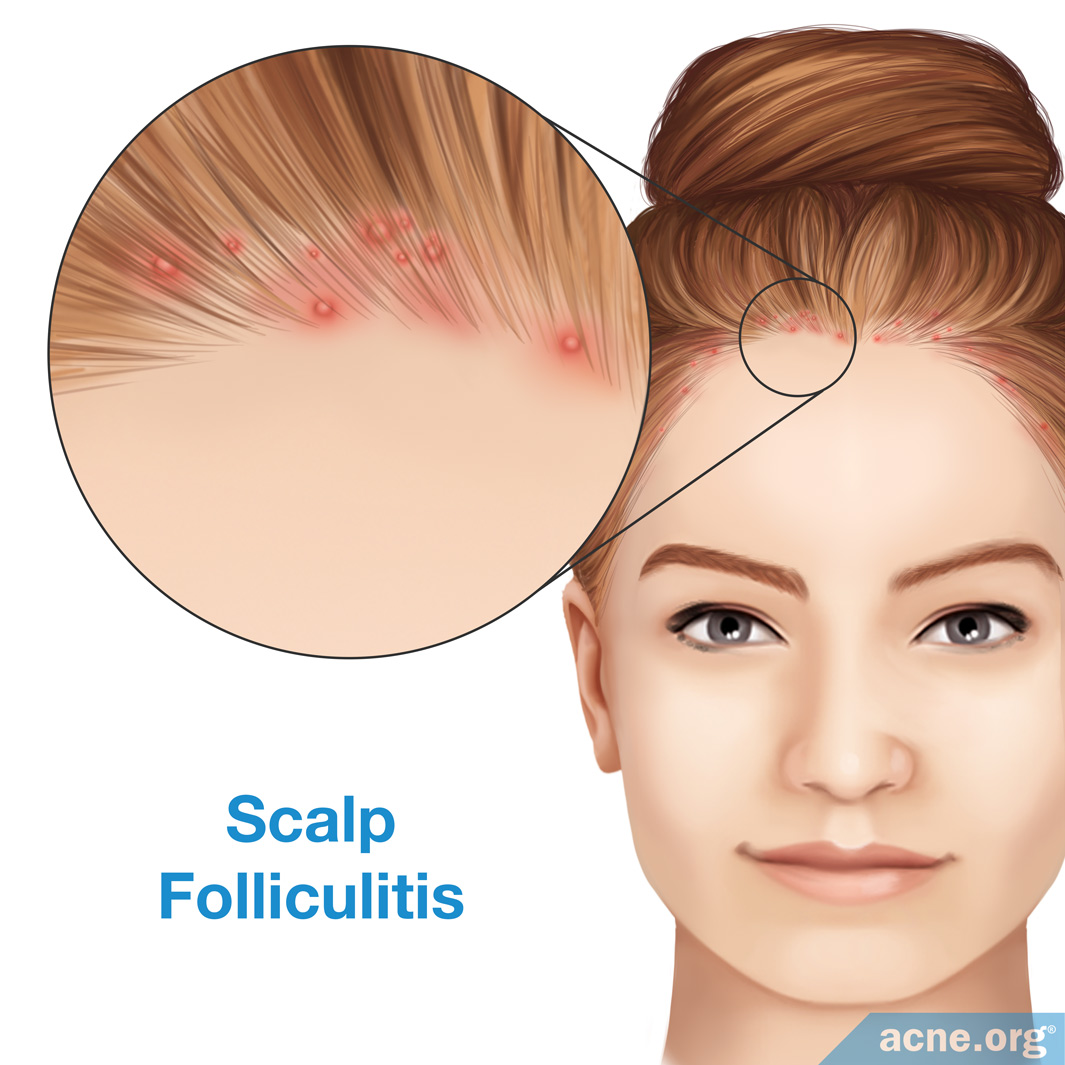
Scalp folliculitis is a hair follicle disorder which can result in widespread, itchy breakouts, often along the hairline. It is thought to be caused by bacteria and yeasts.7 If you think you have folliculitis, see your doctor for prescription therapy. Therapy for scalp folliculitis may include antibiotic, antifungal, antihistamine, and/or steroidal agents.
References
- Davis, E. C. & Callender, V. D. A review of acne in ethnic skin: pathogenesis, clinical manifestations, and management strategies. J. Clin. Aesthet. Dermatol. 3, 24-38 (2010). https://www.ncbi.nlm.nih.gov/pubmed/20725545
- Al Aboud, D. M. & Badri, T. Acne Keloidalis Nuchae. [Updated 2020 Jan 15]. In: StatPearls [Internet]. Treasure Island (FL): StatPearls Publishing; 2020 Jan-. Available from: https://www.ncbi.nlm.nih.gov/books/NBK459135/
- Maranda, E.L., Simmons, B.J., Nguyen, A.H. et al. Treatment of acne keloidalis nuchae: A systematic review of the literature. Dermatol. Ther. (Heidelb.) 6, 363 – 378 (2016). https://www.ncbi.nlm.nih.gov/pubmed/27432170
- Sun, K. L. & Chang, J. M. Special types of folliculitis which should be differentiated from acne. Dermatoendocrinol. 9, e1356519 (2017). https://www.ncbi.nlm.nih.gov/pubmed/29484091
- Bu, W., Zhang, M., Gong, X., Ren, G. & Fang, F. Combination of surgery and photodynamic therapy for the treatment of cystic acne of the scalp. Photodiagnosis Photodyn. Ther. 31, 101944 (2020). https://pubmed.ncbi.nlm.nih.gov/32800966/
- Al-Hamdi, K. I. & Saadoon, A. Q. Acne conglobata of the scalp. Int. J. Trichology 12, 35-37 (2020). https://pubmed.ncbi.nlm.nih.gov/32549699/
- Oakley, Amanda. Scalp folliculitis. https://www.dermnetnz.org/acne/scalp-folliculitis.html