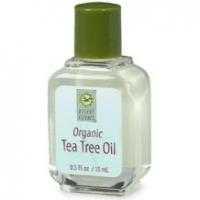
Tea Tree Oil

Reviews
4.0
770 Reviews

Tea tree oil is defined by international standard ISO 4730 (2004) (“Oil of Melaleuca, Terpinen-4-ol type”), which specifies levels of 15 components, which are needed to define the oil as “tea tree oil.”

Among over 98 compounds contained in the oil, terpinen-4-ol is responsible for most of the antimicrobial activity.

The list of ingredients above is provided for informational purposes only. Always check the actual product label in your possession for the most accurate ingredient information due to product changes or upgrades that may not yet be reflected on our web site.

5
44.8%
4
31.7%
3
11%
2
6.5%
1
5.8%

Used Tea Tree Oil? Rate It:

Choose from 1 to 5 stars
November 5, 2008

Pros:

Lightens acne scars (the scars also becomes peel-able), brightens up the skin, reduces acne redness.

Cons:

Takes more than a week to see improved results, product is smelly and can sting on sensitive skin. Moreover, you can get dry skin but you can moisturise afterwards anyways.

Tea Tree Oil really does work. I have tried various acne lotions and pills prescribed by my GP to cure my acne - unfortunately, none has worked well enough for me. Personally, using Tea Tree Oil has taken me a week to see the dramatic change! I'm glad I am using it - it is natural and cheaper. Besides this, I have also been using Aroma Body Essence Tea Tree Oil Facial Scrub. That has also enhanced it too!
This Was Helpful

6 user(s) found this helpful

Report
August 30, 2008

Pros:

the 100% natural tea tree oil works great

Cons:

The Body Shop products aren't as healthy as you think!!!

Ingredients in Tea Tree Oil Scrub: Glycerin, Water, Cocamidopropyl Betaine, Beeswax, Cetearyl Alcohol, Disodium Lauryl Sulfosuccinate, Sodium Cocoyl Isethionate, Zea Mays (Corn) Starch, Tea Tree (Melaleuca Alternifolia) Powder, Melaleuca Alternifolia (Tea Tree) Leaf Oil, Hydrogenated Castor Oil, Phenoxyethanol, Panthenol, Methylparaben, Disodium EDTA, Butylparaben, Ethylparaben, Methyldibromo Glutaronitrile, Isobutylparaben, Propylparaben, Chromium Hydroxide Green, Titanium Dioxide, Yellow 5, Quinoline Yellow, Blue 1. Parabens are BAD for you!!! I suggest using the natural kind of tea tree oil 100%. Soak a cotton ball in water and use a drop of tea tree oil on it. Apply on acne overnight.
This Was Helpful

6 user(s) found this helpful

Report
March 31, 2008

Pros:

Works quickly, Antibacterial properties, extremely effective on some (but not all types of zits), studies indicate that a 5% solution is as effective as benzoyl peroxide and less irritating for some people. A little goes a long way.

Cons:

Can be drying, sting, or be otherwise irritating for some people, shouldn't be used full strength (dilute to at most 25%), Strong medicinal smell is hard to disguise, Careful with open wounds or sensitive skin (spot test first!)

I have used Derma-E's tea-tree (25%)and vitamin E (75%) concoction as a spot treatment for two years now (you can probably find it or something similar at your local health food store or co-op). It really seems to work well on the acne I get on my neck, with some cystic zits vanishing within the day (no marks left over, either...weird). Somewhat effective on my face, too, but not nearly so "miraculous". I did try this briefly for about a month as an all-over treatment/preventative, and it cleared be up somewhat, but not completely (prescriptions are the only thing that can do that for me so far), probably due to the fact that my acne is mostly hormonal. It is the best over the counter remedy I've tried. I suggest diluting it, or finding a preparation that is already diluted, since full strength is way too drying/irritating for the skin, and isn't likely to get any better results (a lot like benzoyl peroxide in that sense).
This Was Helpful

6 user(s) found this helpful

Report
November 8, 2007

Pros:

I have been using tea tree oil mixed with grapeseed oil (2 ml tea tree oil/20 ml of grapeseed oil--10%) on my daughter's skin to treat her cystic acne (she is 18). It is working amazingly!

Cons:

It takes time and persistence (months). Also, I would strongly recommend that a test spot be done first--tea tree oil is strong and can burn sensitive skin. I would never put straight tea tree oil onto the skin, I always dilute with a carrier oil.

Great stuff, it works in combatting acne. In order to maintain control over bad acne, I would suggest using every evening--diluted in a carrier oil (see above). Results may not be immediate. Those with mild sensitivity to tea tree may want to try manuka oil. I've read that manuka oil is also effective, perhaps more effective than tea tree oil (they're in the same plant family), and may not cause as much skin irritation in some, although manuka oil is more expensive. [link removed]
This Was Helpful

6 user(s) found this helpful

Report
February 9, 2018
Ah Tea Tree oil
I had a difficult and somewhat traumatic history with tea tree oil. When I was 15, covered in rancid hormonal acne, our family doctor recommended tea tree. He was convinced it was the miracle I was searching for. Bought a bottle, and as instructed applied neat directly to affected areas (which meant most of my face). Oh sweet merciful Zeus was that a mistake. Within minutes my face was on fire. I decided to tough it out overnight. By morning my face was raging and I had literal sores on my face similar to road rash. NEVER. AGAIN. Fast forward 11 years later. My skin has improved a lot since the teen years, but I still have moderate acne and nasty scars. Yay. I'm cleaning through the boxes of spot-treatment crap I'd bought over the years and came across the same bottle of evil tea tree that dissolved my face. I put it on the side in the 'get rid of pile', but decided last minute to keep it. So my main problem was moisturisers. My skin is stupidly dry, but moisturisers seem to make it worse! If only there was something antibacterial I could add! Hello tea tree my nemesis. After washing my face with warm water, I decided to be brave and add a few drops of this stuff to my Simple night cream. Slathered it on, waited for the pain. There was mild stinging on the spottier regions, but nothing fatal. Woke up next morning and my skin looked great! The redness was down, any zits I had popped were not infected, and no new spots had appeared. I decided to expand a bit more. I added some to my cream cleanser on a night were I was rather drunk and couldn't be bothered to cleanse properly. Slathered it on, wipes it off with cotton wool. Same effect! Calm skin, no new zits. Now I can't be without it. The key is to dilute. Dilute like your life depends on it!! While sometimes I alternate what I cleanse with, using a moisturiser mixed with tea tree oil after is my must. I've recently decided to get braver. Once or twice a week, I'll either have a bath or steam my pores. I'll throughly wet my face, rub a few drops into my palms and lightly rub it onto my problem areas (cheeks, chin, jaw). I'll leave it on for about 5 mins, then wash it off. This leaves my skin really glowing, for whatever reason it gives me a youthful pink-cheeked look. Loooove! Moral of the story - mix with other products. Im not going to lie, my acne is not 100% gone. I still get spots. BUT, they are less likely to get infected, go down quicker, and I swear this stuff is even fading my scars. I definitely get less breakouts, that includes blackheads, whiteheads, and the dreaded cysts. Only downside is the potent odour, but other than having to tolerate my boyfriend moaning about how my face smells, who cares!! Definitely give this stuff a try folks, I totally misjudged it.
This Was Helpful

5 user(s) found this helpful

Report
May 14, 2017
It's good
I bought a tea tree oil stick back before my freshman year of high school, and it was my first time using tea tree on my face. I used it for the whiteheads on my forehead and some pustles and they seemed to go away fairly quickly by drying them out; unfortunately, it's not as effective as it was the first time I used it which was a few years ago but I still recommend you should give it a shot.
This Was Helpful

5 user(s) found this helpful

Report
July 8, 2017
Same thing happened to me. Stopped being as effective after a while
March 8, 2015
Smell is strong
Overall the product will takes weeks before you will see an improvement
This Was Helpful

5 user(s) found this helpful

Report
December 2, 2011

Pros:

Great for the deep rooted pimples
Shrinks size of pimples overnight
Refreshing scent

Cons:

Stings a little
Smell can be quite strong

I love using tea tree oil! I use it strictly diluted as a spot treatment for those deep rooted pimples that develop along the jawline. I recently started a new birth control and am dealing with the initial breakout of bumps along my jawline. So far tea tree oil is the only topical treatment that has given me any relief. It doesn't work as a miracle overnight treatment (not for me anyway) but it definitely reduces the size and redness of pimples overnight. I dilute it 50/50 with water and it doesn't really irritate my skin or overly dry it out. So far, I am pleased with the results.
This Was Helpful

5 user(s) found this helpful

Report
August 19, 2011

Pros:

Natural
Dries pimples
Good for large pimples

Cons:

Not recommended for sensitive skin or acne scars
May experience a burning sensation/red irritated skin
Caused my skin to peel when applying it to my acne scars.

If you were to use this, do not slab it all over your face or else you may experience burning, reddish or peeling. I use this as a spot treatment. I apply this at night with a q-tip on pimples and I leave it on overnight. I do see a noticeable reduction in the size of the pimple however it is no miracle and it may take a couple of uses to see real results. When I tried applying it to my acne scars my skin became irritated and as mentioned before, it caused my skin to peel and I do not have sensitive skin. So I would suggest only using it for pimples.
This Was Helpful

5 user(s) found this helpful

Report
June 30, 2009

Pros:

Dries pimples up fast, all natural remedy, reduces scaring and future breakouts.

Cons:

Smell is strong, makes skin dry out

I have tried almost every product on the market for acne and nothing ever worked for me. I've been using tee tree oil for a few weeks now and I have to say my face looks 50% better then it did when I first started. It brings pimples to a white head which is just pulling all the bad stuff out of your face. After a few weeks I noticed I've hardly had any new pimples form. Just a few little ones. I put it on morning and night after washing my face with a type of cleanser. It tends to dry the skin out though so I put a moisturizer on after the tee tree oil dries. I usually just dab the pimples and scaring areas using a Q-tip or cotton ball. Sometimes I'll rub fresh aloe from the plant on my face after applying the oil, seems to help even out the tone of my skin. I say tee tree oil is definitely worth a try...make sure it's 100* pure. I'll update again in a few weeks.
This Was Helpful

5 user(s) found this helpful

Report