 Acne.org Products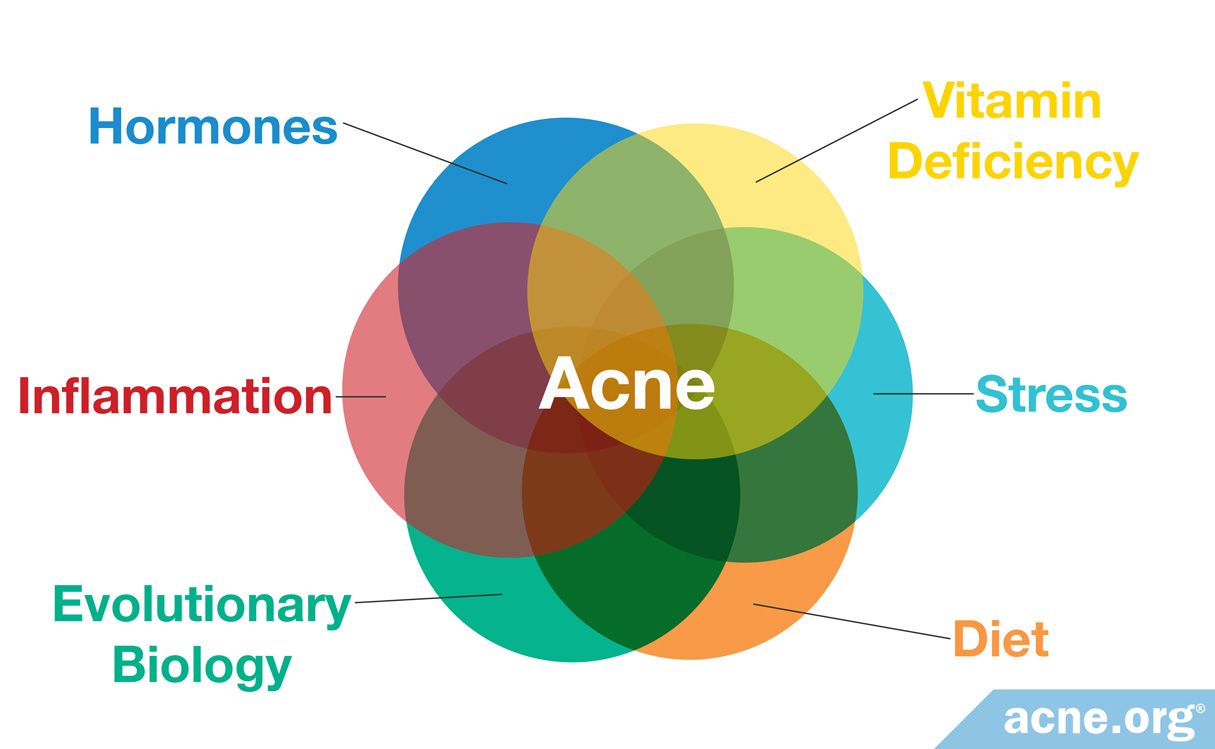
Acne Is Likely Caused by Multiple Factors, Including Hormones, Inflammation, Evolutionary Biology, Medications, Stress, Vitamin Deficiency, and Diet, Amongst Others

The Essential Info
Acne is known as a multifactorial disease, which means several factors likely lead to its development. These factors may include a complex mixture of:
- Hormones (For Sure): We know that hormones are required for acne to start. This is why acne begins at puberty, when hormones start raging. Also, accepted science shows us that higher levels of hormones lead to more acne.
- Inflammation (For Sure): Acne is at its core an inflammatory disease. Inflammatory molecules are found at all stages of acne lesion development, and the redness and soreness in acne lesions is the result of inflammation.
- Evolutionary biology (For Sure): If one or both of your parents had acne, you are more likely to suffer with it as well. Exactly what genes are involved remains a mystery, but it is likely that multiple genes are at play.
- Medications (For Sure): Acne can be a result of taking different medications, including corticosteroids, anabolic androgenic steroids (AAS), lithium, isoniazid, halogens, and EGFR inhibitors (EGFR-I).
- Stress (Very Likely): Mental and physical stress can affect hormones in the body, and may lead to more acne, in both sexes, but particularly in females.
- Vitamin deficiency (Perhaps): Inadequate levels of antioxidants in the skin, like vitamin A, C, and E, may impair the skin’s ability to fight unwanted inflammation. Low levels of vitamin D might also play a part.
- Diet (Perhaps): A high-glycemic diet, as well as not enough omega-3 fats, antioxidants, and zinc in the diet might lead to increased acne symptoms. Would a low-carb or keto diet help clear acne? Investigations are underway.
- …And Others: Science is likely to uncover other factors as it marches along.

The Science
Scientists still do not know exactly what causes acne, but agree that several different factors likely combine to cause it.1-4
While acne may seem like a simple disease, in fact, an intricate process leads to a clogged pore and the redness and inflammation that we see as pimples on the skin.
Hormones – For Sure
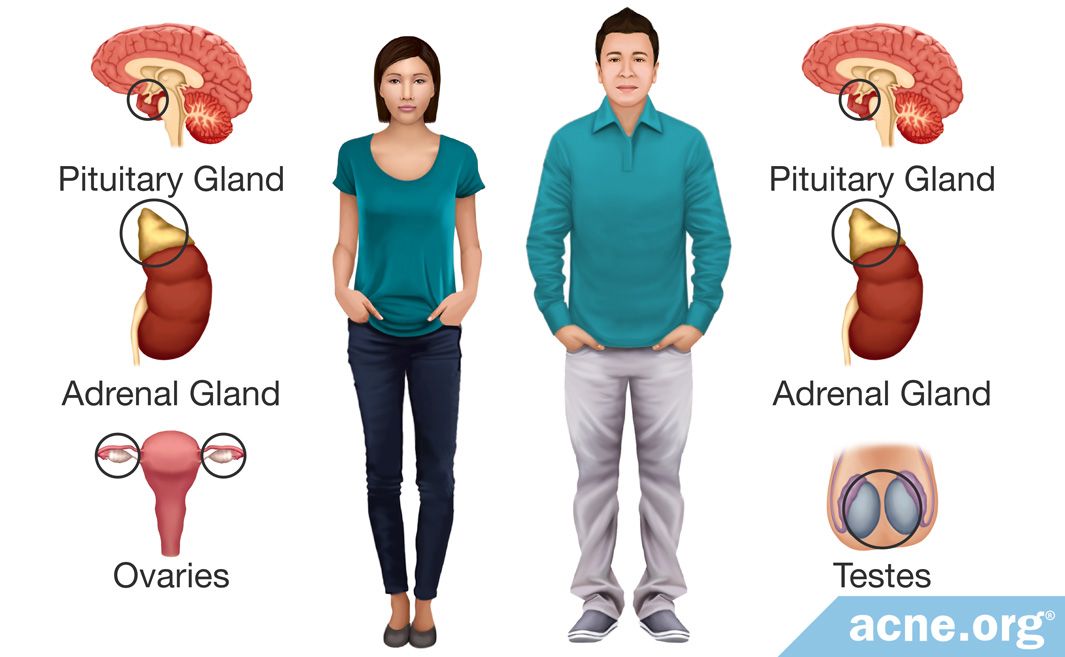
One thing we do know for sure is that acne is in part a hormonal disease. We know this because acne symptoms start only after the body begins producing hormones during puberty. Also, we know that acne symptoms usually increase when male hormones that are present in both males and females, called androgens, are elevated. Increased levels of growth hormones may also affect acne. The most likely explanation why these hormones increase acne is because they increase the amount of skin oil that the skin produces, and more skin oil is strongly linked to more acne. More on Hormones »
Inflammation – For Sure
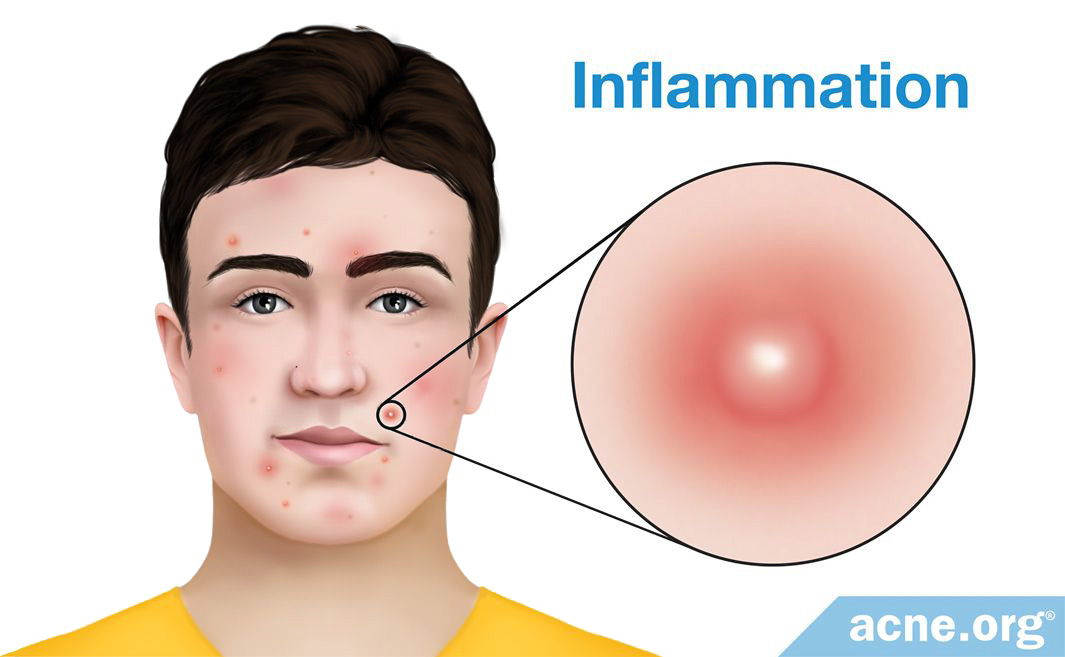
Acne pimples are often red and sore, clear indicators of inflammation.2 As scientists continue exploring the skin, they are becoming more convinced that acne is at its core an inflammatory disease, and are finding inflammatory molecules at every step of acne development, from the very first stages of a clogged pore. We see clear signs of the inflammatory component of acne when we treat it as well. Most acne medications and treatments have specific anti-inflammatory properties that are thought to be part of their anti-acne action. More on Inflammation »
Evolutionary Biology – For Sure

Acne is a genetic disease.1 If one or both of your parents had acne, chances are heightened that you will as well. Why would evolution select for this trait? That is still unknown. More on Genetics »
Medications – For Sure
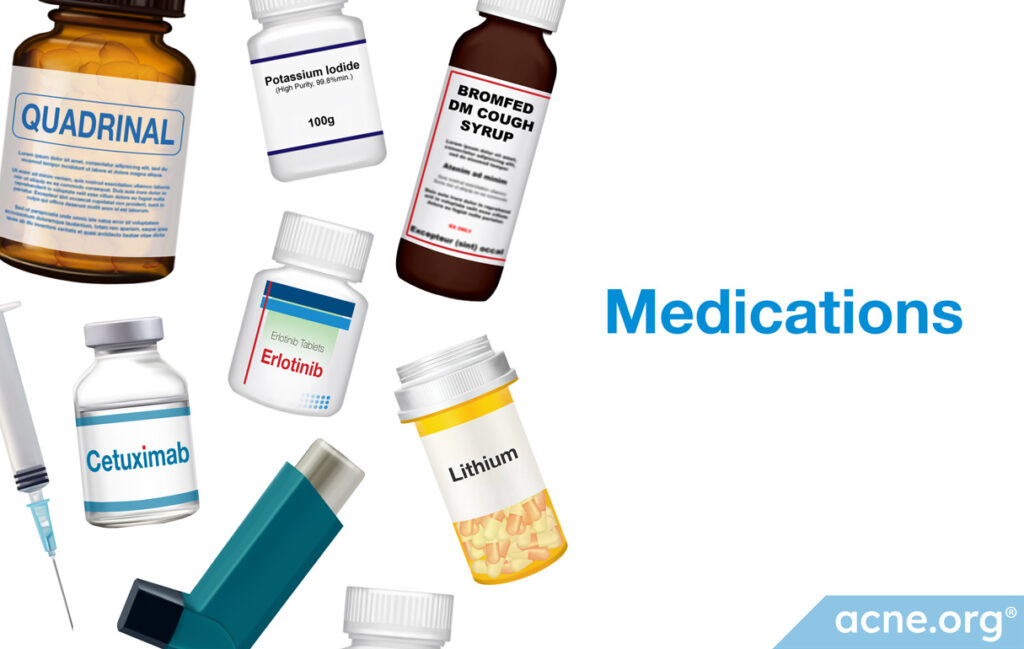
Acne can sometimes develop as a side effect of certain medications used to treat other conditions. Whether a person develops drug-induced acne from these medications depends on how much of the medication he/she takes and for how long. Generally, higher doses are more likely to cause side effects, including acne. In addition, it is not a given that anybody who takes these medications will develop acne; rather, it increases the person’s chances of developing acne. Based on research, the medications that often lead to acne are:
- Corticosteroids
- Anabolic androgenic steroids (AAS)
- Lithium
- Isoniazid
- Halogens*
- EGFR inhibitors (EGFR-I)**
*Halogens are drugs that contain chemicals called iodides, bromides, and/or chlorides. Iodides can be found in some asthma medications, such as theophylline, and in some supplements. Bromides are used as sedatives and are found in some cold remedies, such as the oral medication dextromethorphan hydrobromide (Bromfed DM®). Chlorides include ammonium chloride, which is found in some cough syrups.
**EGFR Inhibitors are cancer drugs such as cetuximab and erlotinib.
Other medications, for example, olanzapine, might also induce or contribute to acne, but more evidence is needed. More on Medications »
Stress – Very Likely

The mind and the body are connected. This is not Eastern philosophy, it is indisputable physical reality. Emotional stress affects our endocrine (hormone) system and immune system, which may leave the skin less able to stay clear. Physical stress, such as over-taxing the body through an overly demanding exercise schedule or not getting enough sleep, may also adversely affect our body’s endocrine and immune systems. More on Stress »
Vitamin Deficiency – Perhaps
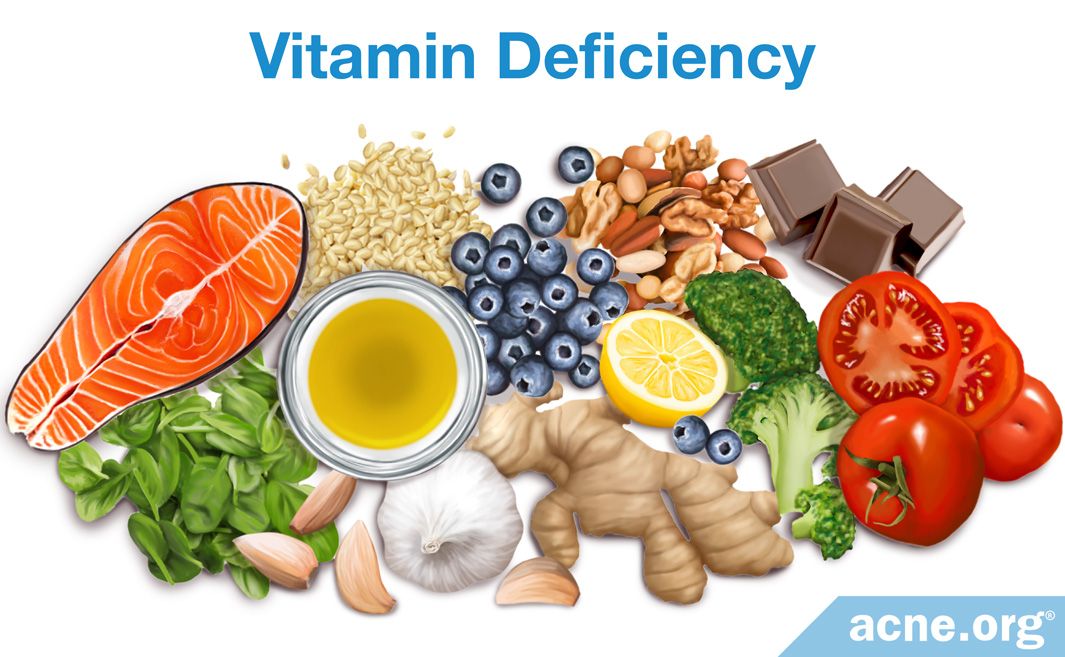
Inadequate levels of vitamins in the skin may prevent the skin from fighting inflammation effectively. When it comes to acne, research is zeroing in on antioxidants in particular, such as vitamins A, C, and E. Antioxidants are the always-vigilant troops the body uses to combat inflammation. Many of us also have inadequate levels of vitamin D in our bodies and skin as well. Whether this leads to more acne is a subject of ongoing interest. More on Antioxidants »
Diet – Perhaps

The impact of diet on any disease is notoriously difficult to study, and acne is no exception. Because of a lack of robust, long-term studies, we do not know whether diet and acne are related, and if so, to what degree. However, the admittedly imperfect research that we have thus far points toward the possibility that a high-glycemic diet, as well as low levels of omega-3 fats, antioxidants, and zinc in the diet might contribute to acne. When it comes to dairy, it is too soon to say either way. More on Diet »
And More…
The real explanation could be a complex mix of the above factors, or some yet undiscovered cause may be uncovered. Acne remains one of medical science’s great unsolved mysteries. Why does it come about? Why does it subside in some people and not others? There are certainly many more questions than there are answers.
References
- Sutaria, A. H., Masood, S. & Schlessinger, J. Acne Vulgaris. [Updated 2020 Aug 8]. In: StatPearls [Internet]. Treasure Island (FL): StatPearls Publishing; 2020 Jan-. Available from: https://www.ncbi.nlm.nih.gov/books/NBK459173/
- Tanghetti, E. A. The role of inflammation in the pathology of acne. J Clin Aesthet Dermatol 6, 27-35 (2013). https://www.ncbi.nlm.nih.gov/pmc/articles/PMC3780801/
- Dréno, B., Bettoli, V., Araviiskaia, E., Sanchez Viera, M. & Bouloc, A. The influence of exposome on acne. J Eur Acad Dermatol Venereol 32, 812-819 (2018). https://pubmed.ncbi.nlm.nih.gov/29377341/
- Dréno, B., Shourick, J., Kerob, D., Bouloc, A. & Taïeb, C. The role of exposome in acne: results from an international patient survey. J Eur Acad Dermatol Venereol 34, 1057-1064 (2020). https://pubmed.ncbi.nlm.nih.gov/31785166/