 Acne.org Products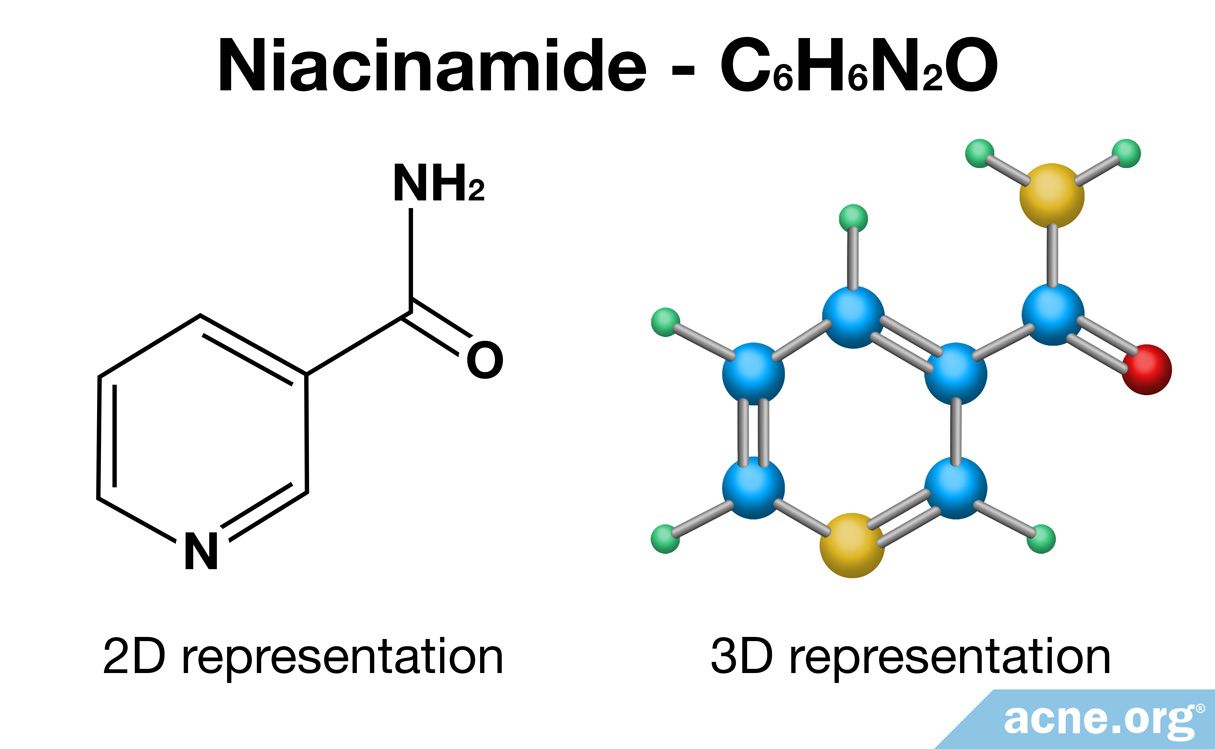
Yes, Research Shows Some Effectiveness

The Essential Info
If you suffer from mild or moderate acne, you may want to consider incorporating niacinamide in your skin treatment regimen because it possesses many properties that make it a suitable ingredient for safe and effective treatment. It reduces sebum production, reduces inflammation, improves skin barrier function, helps speed wound healing, and has been shown to lighten pigmentation more rapidly, all of which lead to a reduction in acne severity on par with topical antibiotics. It also fights skin-aging and helps prevent skin cancer.

The Science
- What Is Niacinamide?
- How Does Niacinamide Treat Acne?
- How Does Niacinamide Compare to Other Acne Treatments?
- How Does Niacinamide Maintain Healthy Skin?
What Is Niacinamide?
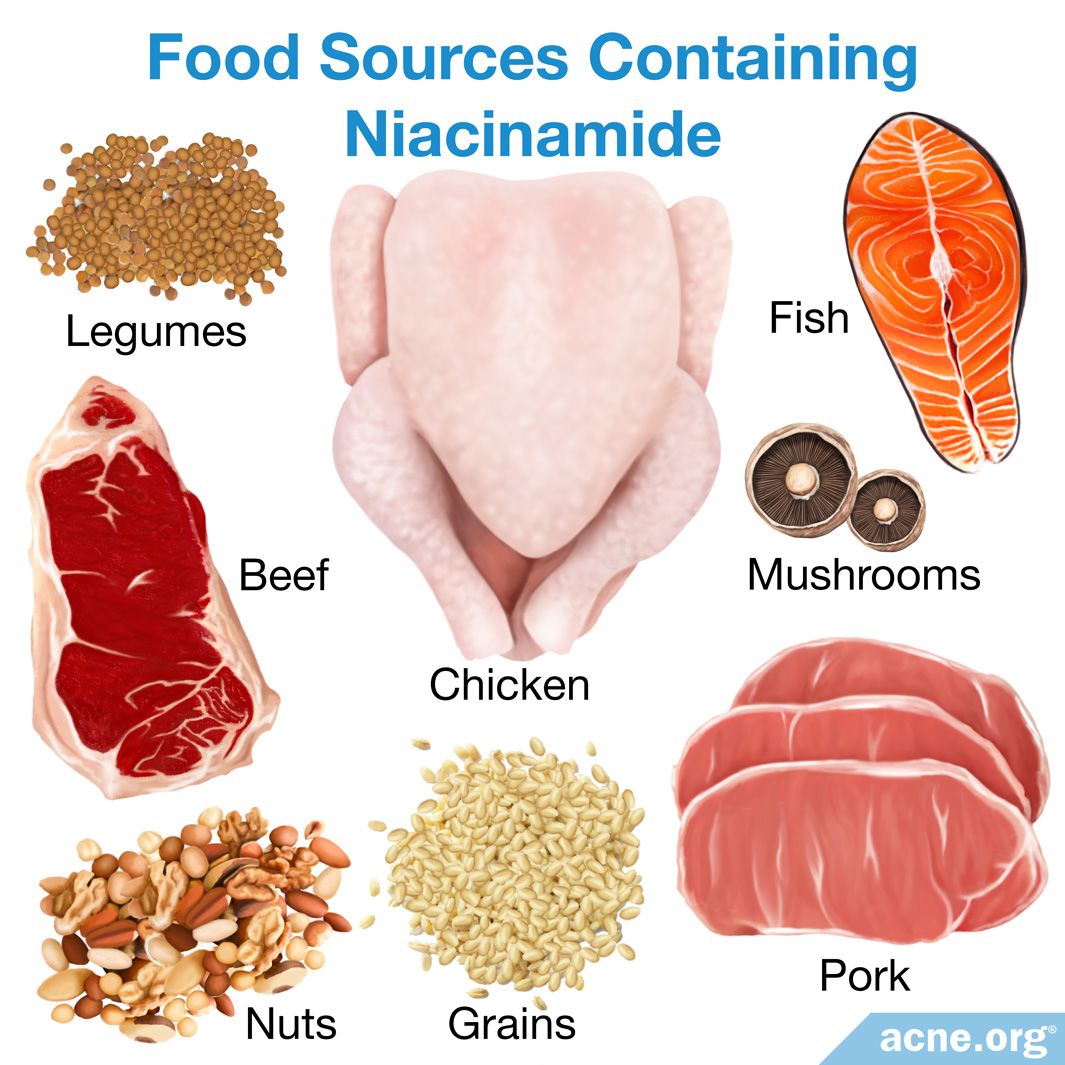
Niacinamide, also called nicotinamide, is vitamin B3. We naturally take in different forms of this vitamin from food sources such as nuts, legumes, grains, mushrooms, chicken, pork, beef, fish, and yeast extracts. Niacinamide is an important part of our diet because it helps the cells of our bodies produce the molecules and energy they need to work properly.
Inside our cells niacinamide is converted into a molecule called NAD, which is needed to produce ATP – the “energy currency” which transports chemical energy around cells. Niacinamide therefore boosts cellular energy and may improve DNA-repair in response to damage. Additionally, it helps regulate production of the enzyme, PARP-1, which is important not only in DNA-repair but also in the production of inflammatory molecules.1

Niacinamide can be administered topically and orally and can treat a variety of medical conditions. The authors of a 2014 review paper published in the Australasian Journal of Dermatology describe the vitamin as “widely available[…]with an excellent and established safety profile. It is already used clinically for some dermatological conditions[…]and shows promise for a number of other inflammatory conditions.”1
How Does Niacinamide Treat Acne?
Over the years numerous clinical studies have found that topical niacinamide is safe and effective for the treatment of mild to moderate acne.

In a 2008 study, the effectiveness of a 4% niacinamide gel was tested on 41 patients with mild to moderate acne. At this time, niacinamide was a newly-approved drug. After eight weeks, 38 of the patients had completed the course of treatment. Although two people found niacinamide to have no effect, and three were unsatisfied with the treatment, five were healed of their acne. The authors of the study stated, “Decrease in the number of pustules, comedones [whiteheads and blackheads] and papules were statistically significant at the end of the treatment compared to onset of treatment. After the evaluation of the treatment by a dermatologist, treatment was found to be ineffective in two patients; there were mild improvement in 10 patients; moderate healing in 12 patients; prominent healing in nine patients and complete healing in five patients.”2
How exactly does niacinamide treat acne?
- Reduces inflammation. Cutibacterium acnes (C. acnes) promotes the inflammatory effect of acne by interacting with the surface of skin cells, encouraging them to produce inflammatory molecules, such as interleukin-8. Niacinamide reduces the production of these molecules and, as a result, minimizes inflammation.3
- Decreases sebum (skin oil) production. Excess sebum within clogged pores drives the formation of acne lesions, and niacinamide can help reduce sebum production.

One study found that applying a niacinamide lotion to the skin for six weeks reduced sebum levels by about 30%. The authors of the study suggested that niacinamide could prove to be superior to other treatments because “most currently available products function by absorbing sebum from the face rather than modulating its production.”4
Studies show also that when administered for several weeks, niacinamide reduces acne lesions with only a small number of people experiencing side effects.
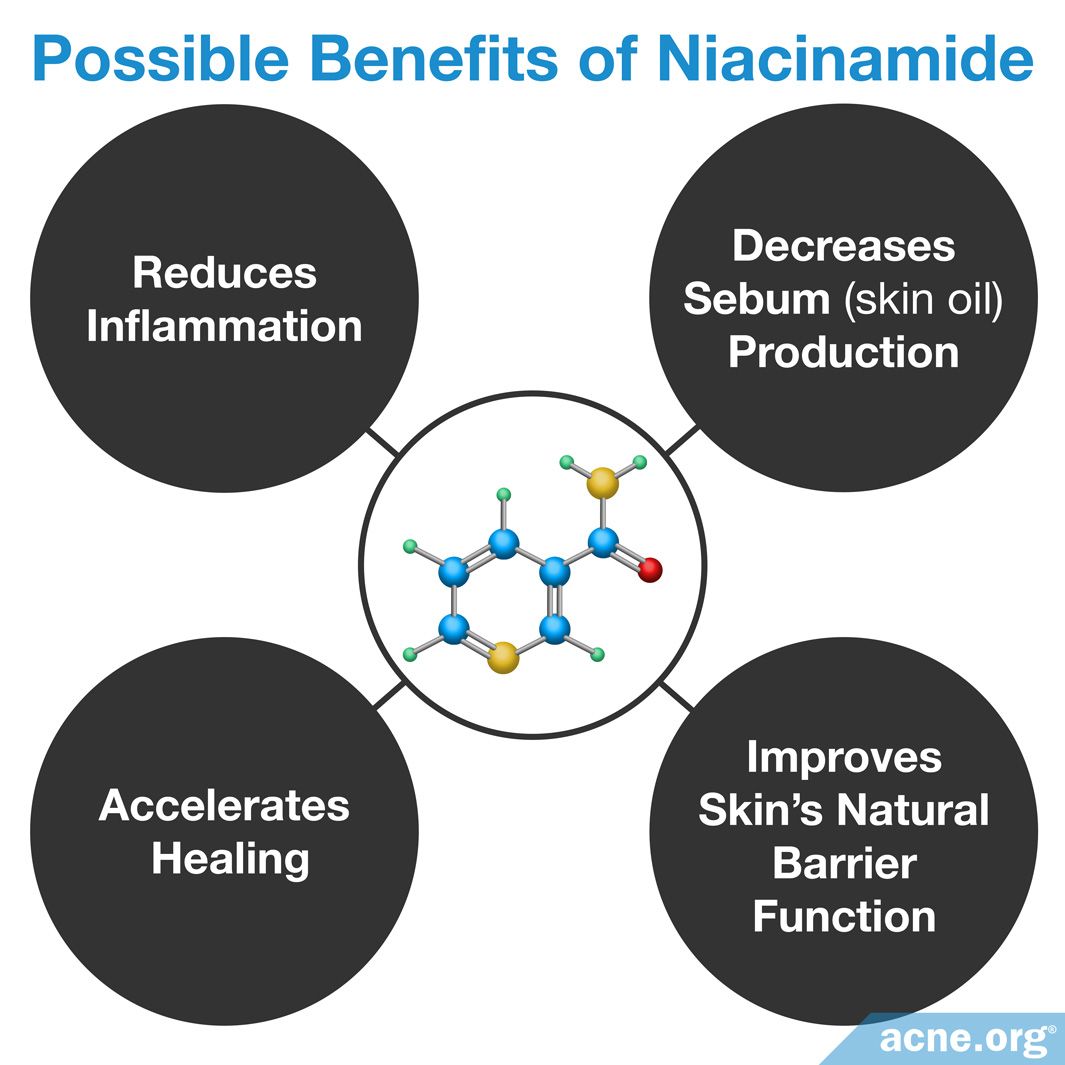
- Accelerates healing. Niacinamide promotes wound healing, which can help the skin to recover from the damage caused by acne. One review showed that applying a 2% niacinamide ointment made it “possible to reduce the time to wound healing from 15 – 17 days to 7 – 10 days.”5
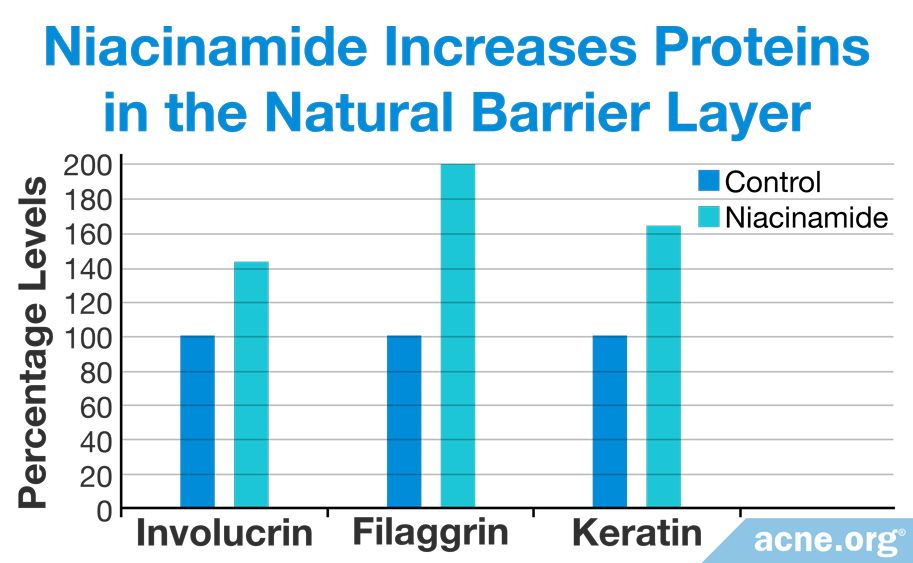
- Improves the skin’s natural barrier function. Another benefit of niacinamide is that it increases moisture retention by improving the skin’s barrier function. By increasing the production of ceramides (a type of fat that prevents the skin from drying) and keratin (a protein that gives the skin its strength, flexibility, and waterproof qualities), niacinamide boosts the strength of the skin’s barrier, which helps prevent water-loss and heal acne lesions.
How Does Niacinamide Compare to Other Acne Treatments?
There are several clinical studies that support niacinamide as a suitable treatment for acne, especially when used alongside other therapies. Overall, the evidence suggests that it is just as effective as topical antibiotics.
Expand to read details of studies
One study compared 4% niacinamide gel to the commonly used antibiotic, clindamycin, in the form of gel. After 8 weeks of treatment in 80 patients, the average acne grade decreased from 6 to 2 in both groups, the authors of the study stating that both treatments “were significantly more efficacious in oily and non-oily skin types, respectively,” meaning that niacinamide and clindamycin both worked better for sufferers with oily skin.6
A clinical study on 76 people in 1995 found that acne severity was improved in 82% of patients applying niacinamide gel for eight weeks. This research actually found it to be more effective than clindamycin gel, which resulted only in improvements for 68% of the patients studied. “Efficacy was evaluated at 4 and 8 weeks using a Physician’s Global Evaluation, Acne Lesion Counts, and an Acne Severity Rating,”7explained the authors. They found that niacinamide reduced acne papules and pustules by 60% (43% for clindamycin) and reduced acne severity by 52% (38% for clindamycin).
In another study, which followed 76 patients over an eight-week period, acne severity was reduced by 52% with niacinamide and by 38% with clindamycin. The niacinamide gel was also shown to reduce sebum production.7

Clinical studies have compared the effects of niacinamide also to the topical antibiotic, erythromycin, which is also used to treat acne. A study of 160 patients pointed out that niacinamide may have a more pronounced effect than erythromycin after eight weeks of treatment. “The group treated with 4% niacinamide gel had significantly greater improvement in seborrhoea [excessive sebum] scores,” said the authors of a review paper discussing the study.1
The reduced side effects of niacinamide compared to antibiotics may also make it a preferable treatment option. One study, in which researches gave 38 people 4% niacinamide gel for eight weeks, saw only one patient experiencing pruritus (severe itching) and three patients complaining of mild burning sensations. The authors pointed out that “the side effects of niacinamide are much safer than those of antibiotics and niacinamide does not create antibiotic-resistant pathogens.”8
How Does Niacinamide Maintain Healthy Skin?
Ongoing research shows that the cellular energy-boosting action of niacinamide provides other benefits, such as inhibiting skin cancer-cell formation and assisting in the fight against skin aging. Some sunscreen and cosmetics manufacturers have started to include it in the formulations of their products for these reasons.1
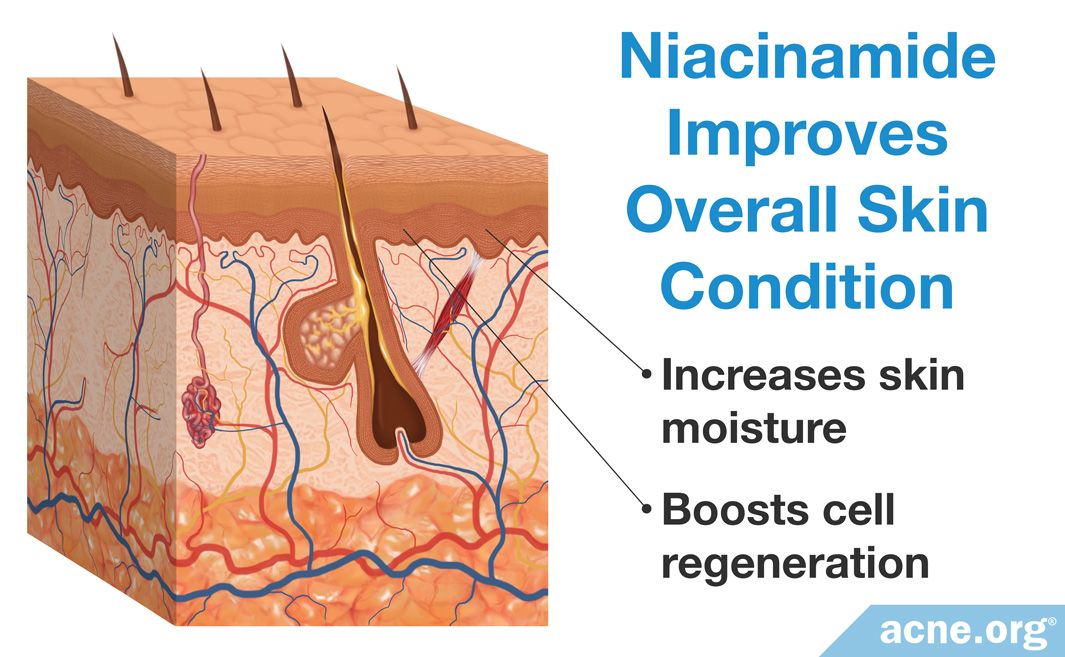
Niacinamide improves the overall condition of skin by:
- Increasing skin moisture. Niacinamide boosts moistre levels in the skin by ramping up the production of ceramides, keratin, and other protective lipids that strengthen the skin barrier to prevent water-loss.5
- Boosting cell regeneration. Niacinamide helps skin cells regenerate in response to damage, similar to those of younger cells. Applying niacinamide to the surface of the skin improves its texture and quality, evening out wrinkles and helping to minimize sun damage. By increasing energy at the cellular level, niacinamide encourages cells to produce more proteins, including the vital anti-aging protein, collagen.5
References
- Chen, A. C. & Damian, D. L. Nicotinamide and the skin. Australas J Dermatol 55, 169 – 175 (2014). https://www.ncbi.nlm.nih.gov/pubmed/24635573
- Kaymak, Y. & Önder, M. An Investigation of Efficacy of Topical Niacinamide for the Treatment of Mild and Moderate Acne Vulgaris. Journal of the Turkish Academy of Dermatology 2, 4 – 7 (2008). http://www.jtad.org/2008/4/jtad82402a.pdf
- Grange, P. A., Raingeaud, J., Calvez, V. & Dupin, N. Nicotinamide inhibits Propionibacterium acnes-induced IL-8 production in keratinocytes through the NF-kappaB and MAPK pathways. J Dermatol Sci 56, 106 – 112 (2009). https://www.ncbi.nlm.nih.gov/pubmed/19726162
- Draelos, Z. D., Matsubara, A. & Smiles, K. The effect of 2% niacinamide on facial sebum production. J Cosmet Laser Ther 8, 96 – 101 (2006). https://www.ncbi.nlm.nih.gov/pubmed/16766489
- Gehring, W. Nicotinic acid/niacinamide and the skin. J Cosmet Dermatol 3, 88 – 93 (2004). https://www.ncbi.nlm.nih.gov/pubmed/17147561
- Khodaeiani, E., Fouladi, R. F., Amirnia, M., Saeidi, M. & Karimi, E. R. Topical 4% nicotinamide vs. 1% clindamycin in moderate inflammatory acne vulgaris. Int J Dermatol 52, 999 – 1004 (2013). https://www.ncbi.nlm.nih.gov/pubmed/23786503
- Shalita, A. R., Smith, J. G., Parish, L. C., Sofman, M. S. & Chalker, D. K. Topical nicotinamide compared with clindamycin gel in the treatment of inflammatory acne vulgaris. Int J Dermatol 34, 434 – 437 (1995). https://www.ncbi.nlm.nih.gov/pubmed/7657446
- Rolfe, H. M. A review of nicotinamide: treatment of skin diseases and potential side effects. J Cosmet Dermatol 13, 324 – 328 (2014). https://www.ncbi.nlm.nih.gov/pubmed/25399625