Adult acne

More common than you think

Statistics

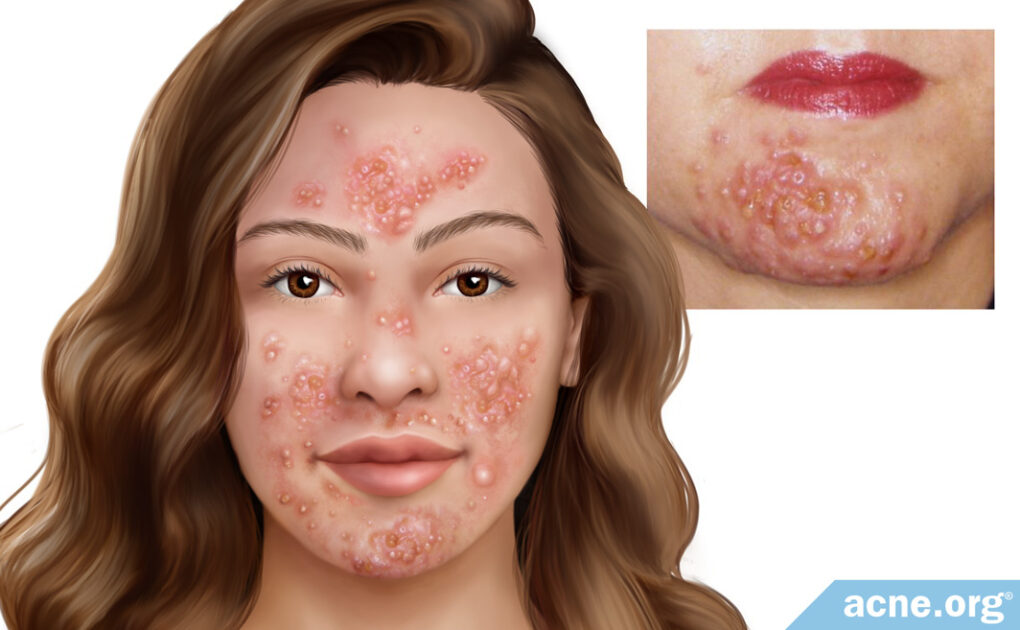
Adult acne affects 25% of all adult men and 50% of adult women at some time in their adult lives. One third of adults affected with facial acne also have acne on their body. These are the official statistics, but I personally don't know many adults who have not had a zit or two in their adult lives. People can develop unpleasant acne or have an acne recurrence in their 20s, 30s, 40s and beyond. Dermatologists are seeing more adult acne than in previous decades. An article in the International Journal of Cosmetic Science in 2004 stated, "Recent epidemiological studies show that there appears to be an increase in post-adolescent acne, and that the disease is lasting longer and is requiring treatment well into the mid forties." Regardless of when someone struggles with acne, it can be difficult to cope, and can cause depression and social anxiety in an adult the same way it can in a teen.

Causes of adult acne

Although the causes of adult acne are unknown, possible causes include hormones, cosmetics, stress, and an increase of resistant bacteria. Women in particular often experience premenstrual flares, often around the mouth.

Treatment of adult acne

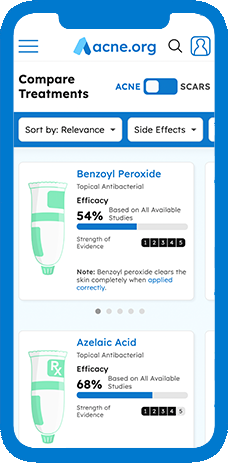
There are many adult acne products, however, in my experience, the overall best treatment for adult acne is identical to the best treatment for teen acne, benzoyl peroxide. But benzoyl peroxide must be administered in a very specific manner to achieve total clearing. See the Regimen for a step-by-step program you can use to clear your skin using benzoyl peroxide. Thousands of adults have used the Regimen to treat their acne with great results.

Not so uncommon

It is important to realize that adult acne is more common than people may think, and adult sufferers are not alone. If you are troubled by adult onset acne, promptly consult your doctor. She or he may have a hormonal adult acne treatment that can help, or read the Regimen and give it a go.

You can find further tips to stop adult acne on the adult acne message boards. Many adults frequent the boards and are happy to answer questions.

References

Bataille V, Snieder H, MacGregor AJ, Sasieni P, Spector TD. "The influence of genetics and environmental factors in the pathogenesis of acne: a twin study of acne in women." The Journal of Investigative Dermatology. 2002 Dec;119(6):1317-22.

Cunliffe, W.J., V. Goulden, C.H. McGeown. "The Familial Risk of Adult Acne: A Comparison Between First-Degree Relatives of Affected and Unaffected Individuals." The British Journal of Dermatology. 1999 Aug;141(2):297-300.

Cunliffe, W.J., V. Goulden, and G.I. Stables. "Prevalence of Facial Acne in Adults." Journal of the American Academy of Dermatology. 1999 Oct;41(4):577-80.

Cunliffe, W.J., and D.C. Seukeran. "Acne Vulgaris in the Elderly: The Response to Low-Dose Isotretinoin." The British Journal of Dermatology. 1998 Jul;139(1):99-101.

Dumont-Wallon G, Dreno B. [Specificity of acne in women older than 25 years][Article in French] Presse Medicale. 2008 Apr;37(4 Pt 1):585-91.

George R, Clarke S, Thiboutot D. "Hormonal therapy for acne." Seminars in Cutaneous Medicine and Surgery. 2008 Sep;27(3):188-96.

Knaggs HE, Wood EJ, Rizer RL, Mills OH. "Post-adolescent acne." International Journal of Cosmetic Science. 2004 Jun;26(3):129-38.

Pace J. "Acne in adult women." Skinmed. 2008 Mar-Apr;7(2):61-2.

Seirafi H, Farnaghi F, Vasheghani-Farahani A, Alirezaie NS, Esfahanian F, Firooz A, Ghodsi SZ. "Assessment of androgens in women with adult-onset acne." International Journal of Dermatology. 2007 Nov;46(11):1188-91.

Williams C, Layton AM. "Persistent acne in women: implications for the patient and for therapy." American Journal of Clinical Dermatology. 2006;7(5):281-90.